
Introduction
A cancer diagnosis brings many questions, and one common question is whether surgery can be done through small incisions instead of one large cut. This is why many patients searching for a laparoscopic cancer surgeon in Paschim Vihar want to understand what the approach involves. This guide explains laparoscopic cancer surgery in simple terms for an informed conversation with a surgeon.
What Is Laparoscopic Cancer Surgery?
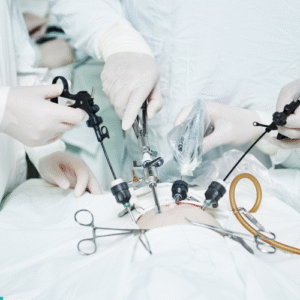
Laparoscopic cancer surgery is a minimally invasive technique in which the surgeon operates through a few small incisions instead of one large opening. A camera-fitted tube, called a laparoscope, gives a magnified view of the organs, while long instruments remove the tumour. This approach may suit selected stomach, colorectal, esophageal and gallbladder cancers, depending on individual findings.
When May Laparoscopic Cancer Surgery Be Considered?
Not every cancer case suits this approach. A laparoscopic surgeon in Paschim Vihar typically evaluates tumour size, location, spread and the patient’s fitness for surgery. Early and some intermediate-stage cancers are more commonly considered, though the final decision depends on imaging, endoscopy and clinical assessment, not a fixed rule.
What Does a Laparoscopic Cancer Surgeon Do?
A cancer surgeon in Paschim Vihar who performs laparoscopic procedures does more than operate. The role includes reviewing reports, explaining diagnosis and options, coordinating with oncologists when needed, performing surgery safely, and guiding recovery. Clear communication matters as much as skill.
Benefits of Minimally Invasive Cancer Surgery
Minimally invasive cancer surgery is generally associated with smaller incisions, less blood loss and less pain than open surgery. Many patients also have a shorter hospital stay and resume routine activities sooner. These are general observations, not guarantees, since recovery varies with cancer type and health.
Laparoscopic Surgery vs Open Surgery
Patients often ask whether laparoscopic cancer surgery is always better than open surgery. It is not always superior. Open surgery remains necessary for certain advanced, complex or large tumours, or when safety would otherwise be compromised. The priority is always complete, safe tumour removal, and the surgical route is chosen to best achieve that for each patient.
How Doctors Determine Whether Laparoscopic Surgery Is Suitable
Deciding whether laparoscopic GI surgery is appropriate involves structured evaluation. Surgeons consider cancer type, stage, tumour size, location, fitness for anaesthesia, and prior abdominal surgeries affecting access. Imaging such as CT or MRI, with endoscopy, usually guides this decision.
What Patients Can Expect Before Surgery
Before laparoscopic cancer surgery, patients typically undergo blood tests, imaging and a fitness assessment for anaesthesia. The surgeon explains the procedure, possible risks, and the chance of converting to open surgery if unexpected findings arise. Patients should share their complete medical history and clarify doubts.
Recovery and Follow-Up After Surgery
Recovery after laparoscopic GI cancer surgery is monitored closely before discharge, with gradual return to normal diet and activity alongside wound care and pain control. Regular follow-up and pathology review help track recovery and guide further treatment, such as chemotherapy, if recommended.
Dr. Tushar Aeron's Expertise in Laparoscopic Cancer Surgery
Dr. Tushar Aeron brings over 20+ years of experience in GI Surgery and Oncology, currently serving as Director and Unit Head at Sri Balaji Action Medical Institute. His training began at Safdarjung Hospital, Delhi, followed by senior residency in GI Surgery at GB Pant Hospital, Delhi, and an MCh in Surgical Gastroenterology from KGMU, Lucknow.
This GI-focused training is relevant to patients considering laparoscopic cancer surgery in Paschim Vihar, since GI oncology requires familiarity with the anatomy and technical demands of stomach, colorectal, esophageal and gallbladder cancers. Dr. Aeron’s expertise includes GI oncology, minimally invasive surgery, laparoscopic GI surgery and robotic GI surgery, allowing each case to be evaluated individually.
Why Consider a Laparoscopic Cancer Surgeon in Paschim Vihar?
Patients from Paschim Vihar and nearby areas such as Peeragarhi, Punjabi Bagh, Janakpuri, Vikaspuri, Nangloi and Rajouri Garden often prefer a surgeon whose training focuses specifically on GI oncology and minimally invasive techniques. Access to a surgeon experienced in both laparoscopic and open approaches means the plan can be tailored to the individual rather than fitting the patient to one technique, a meaningful consideration for residents across West Delhi.
Frequently Asked Questions
Q.1 What does a laparoscopic cancer surgeon do?
A laparoscopic cancer surgeon diagnoses and treats gastrointestinal cancers using minimally invasive techniques when suitable. This includes reviewing reports, planning the approach, performing the operation, and supervising recovery, along with coordinating any further treatment needed.
Q.2 Is laparoscopic cancer surgery suitable for every patient?
No, it is not suitable for every patient or every cancer. Suitability depends on tumour size, stage and location, along with overall health and surgical history. A detailed clinical evaluation is required before recommending this approach.
Q.3 What are the benefits of minimally invasive cancer surgery?
Minimally invasive cancer surgery is generally linked with smaller incisions, less pain and a potentially shorter hospital stay. Outcomes vary between patients, though, and these benefits are not guaranteed, so the surgeon explains what to expect.
Q.4 How do I choose a cancer surgeon in Paschim Vihar?
Choosing a cancer surgeon involves reviewing their training in GI oncology, experience with both laparoscopic and open techniques, and clarity in communication. Checking current hospital affiliation and asking direct questions during consultation also helps.
Q.5What factors determine whether cancer surgery can be performed laparoscopically?
Key factors include cancer type, stage, tumour size and location, and whether it has spread nearby. Overall fitness for surgery and prior abdominal operations are also considered, alongside imaging and endoscopic findings.
Conclusion
Understanding laparoscopic cancer surgery helps patients approach treatment decisions with clarity rather than uncertainty. This technique offers real potential advantages in select cases, but it is not appropriate for everyone, and thorough clinical evaluation remains essential. Patients researching a laparoscopic cancer surgeon in Paschim Vihar are encouraged to seek an in-person consultation and bring relevant medical reports so the safest treatment path can be identified.