
Introduction
A surgical gastroenterologist for cancer in Paschim Vihar is a specialist surgeon trained to diagnose and surgically treat cancers of the digestive system — including the stomach, esophagus, colon, liver, pancreas, and gallbladder. In Paschim Vihar, patients can consult Dr. Tushar Aeron, a Robotic GI and GI Oncology Surgeon at Sri Balaji Action Medical Institute, for evaluation and surgical management of gastrointestinal cancers.
If you or a family member has been told you may need surgery for a digestive-system tumor, understanding who to consult and what to expect can make the process far less overwhelming. This guide answers the most common questions patients search for.
Who is a Surgical Gastroenterologist?
The terms “gastroenterologist,” “surgical gastroenterologist,” and “GI oncosurgeon” are often used interchangeably by patients, but they refer to different roles in cancer care.
| Specialist | Role |
|---|---|
| Gastroenterologist | Diagnoses digestive disorders using endoscopy, colonoscopy, and imaging; generally does not perform major surgery |
| Surgical Gastroenterologist (GI Surgeon) | Performs surgery for GI diseases, including cancers, using open, laparoscopic, or robotic techniques |
| GI Oncosurgeon | A surgical gastroenterologist with additional focus on cancer surgery — tumor removal, lymph node clearance, and reconstruction |
A surgical gastroenterologist for cancer typically works alongside medical oncologists and radiation oncologists as part of a multidisciplinary cancer care team, with the surgical role focused on removing the tumor and affected tissue when surgery is part of the treatment plan.
When Should You Consult a Surgical Gastroenterologist for Cancer?
You should consider consulting a surgical gastroenterologist when a gastroenterologist or physician has identified a suspicious growth, tumor, or diagnosed cancer in the digestive tract, or when ongoing digestive symptoms need surgical-level evaluation.
Common conditions where a surgical opinion may be recommended include:
- Stomach cancer – persistent indigestion, unexplained weight loss, difficulty swallowing
- Esophageal cancer – progressive difficulty swallowing, chest discomfort
- Colorectal cancer – change in bowel habits, rectal bleeding, abdominal pain
- Gallbladder cancer – often detected incidentally during gallstone evaluation or imaging
- Liver tumors – detected via ultrasound, CT, or MRI, requiring surgical assessment
- Pancreatic tumors – abdominal pain, jaundice, or unexplained weight loss
Early consultation matters — the sooner a suspected GI cancer is evaluated by a surgical specialist, the more treatment options are typically available. If your gastroenterologist has flagged an abnormal finding, a timely surgical opinion is generally advisable rather than delayed.
Why Choose Dr. Tushar Aeron in Paschim Vihar
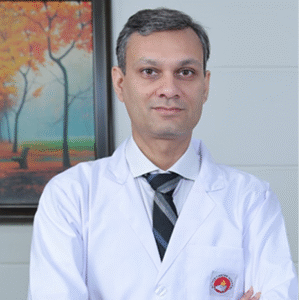
Dr. Tushar Aeron is a Robotic GI Surgeon and Director & Unit Head of the Department of GI Surgery and GI Oncology at Sri Balaji Action Medical Institute, Paschim Vihar, New Delhi.
His background includes:
- 20+ years of experience in GI Surgery and GI Oncology
- M.Ch. in Surgical Gastroenterology from King George’s Medical University (KGMU), Lucknow
- Surgical training at Safdarjung Hospital and GB Pant Hospital, Delhi
- Further specialization at Tata Memorial Hospital and KEM Hospital, Mumbai
- Former Head of the Department of GI & Laparoscopic Surgery at Rajiv Gandhi Super Specialty Hospital, Delhi
- Expertise in laparoscopic and robotic GI cancer surgery, alongside conventional open surgery when required
For patients in Paschim Vihar and West Delhi, this means access to specialized GI oncology surgical expertise without needing to travel to South or Central Delhi hospitals for a surgical opinion.
Treatment Approach: Robotic, Laparoscopic, or Open Surgery
Not every GI cancer is suited to the same surgical technique. The right approach depends on the tumor type, stage, location, and the patient’s overall health.
- Robotic surgery uses robotic-assisted instruments for enhanced precision in selected complex cancer cases, generally with smaller incisions and potentially faster recovery.
- Laparoscopic surgery is a minimally invasive technique using small incisions and a camera, suitable for many GI cancers when appropriate.
- Open surgery may still be necessary for certain advanced, large, or complex tumors where minimally invasive access is not safe or feasible.
The final decision is individualized after reviewing imaging, pathology reports, and the patient’s medical history — no single technique is right for every patient.
What to Bring to Your First Consultation
To make your first visit as productive as possible, it helps to bring:
- Previous endoscopy or colonoscopy reports
- CT scan, MRI, PET-CT, or ultrasound reports (with films/CDs if available)
- Biopsy and pathology reports
- Blood test and tumor marker reports, if done
- Details of any previous treatment or surgery
- A list of current medications
Having these ready allows the surgeon to give you a more accurate assessment during the first consultation itself.
Frequently Asked Questions
2. Is Dr. Tushar Aeron available for GI cancer surgery in Paschim Vihar?
3. Do all GI cancers require surgery?
4. What is the difference between a gastroenterologist and a surgical gastroenterologist?
5. Can robotic surgery be used for all GI cancers?
6. How do I know if I need a second opinion from a GI cancer surgeon?
7. What reports should I carry for my first appointment?
8. How can I book a consultation with Dr. Tushar Aeron?
Conclusion
Choosing the right surgical gastroenterologist for cancer in Paschim Vihar can make a meaningful difference in how confidently you navigate a GI cancer diagnosis. With over two decades of experience and specialized training in robotic and laparoscopic GI oncology surgery, Dr. Tushar Aeron offers patients in Paschim Vihar and West Delhi access to advanced surgical cancer care close to home.
Book a consultation to discuss your reports and treatment options.